
Kitchen renovation 2026 planning feels different for many Surrey and Langley homeowners. Families are still interested in improving their kitchens, but they are also more careful about budget, timing, product choices, and avoiding costly mistakes. Instead of rushing into a major renovation based only on design trends, many homeowners are asking a more practical question: “How do we create a kitchen that looks good, works well, and stays within a realistic plan?”
At Kitchen Express, we work with many local families who want a better kitchen without unnecessary complication. Some are updating an older home. Some are preparing for a growing family. Others want a cleaner, safer, easier-to-use kitchen for everyday cooking. In 2026, the smartest kitchen renovation decisions are not always the most expensive ones. They are the decisions that balance design, durability, availability, and professional support.
1. Start With the Real Scope, Not Just Inspiration Photos
Inspiration photos are useful, but they do not tell the full story. A kitchen that looks simple online may require major layout changes, custom sizing, special materials, or additional trade work. Before choosing cabinet colours or countertop patterns, it is important to define the real scope of the project.
Start by asking:
- Are we keeping the same kitchen layout?
- Do we need more storage, better workflow, or both?
- Are the appliances staying in the same locations?
- Do we need cabinets only, or cabinets and countertops together?
- Is this a full renovation, a practical update, or a quicker replacement project?
For many Surrey and Langley families, keeping the existing layout can help control cost and timeline. That does not mean the kitchen has to look the same. Better cabinet planning, improved drawer storage, cleaner countertop selection, and more thoughtful design details can still make a major difference.
A practical kitchen renovation begins with clear priorities. If the main goal is speed, in-stock cabinets may be the best fit. If the main goal is a more customized look, a local custom cabinet option may be worth considering. If the goal is to reduce mistakes, professional kitchen design support should come early in the process.
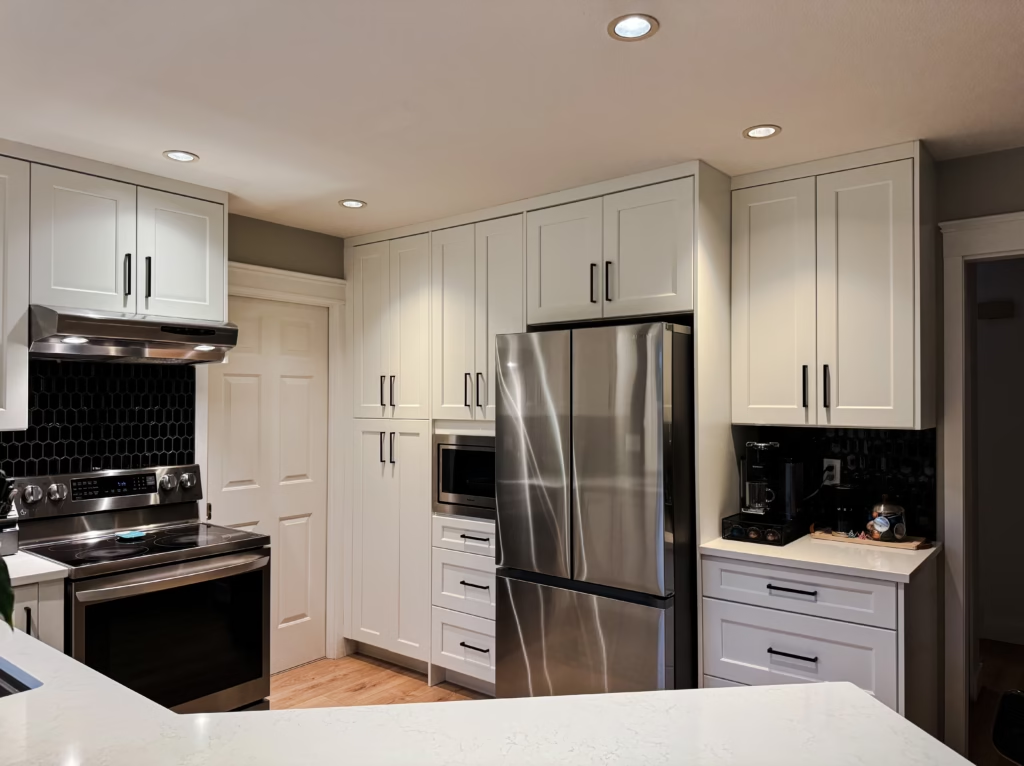
2. Choose Cabinets Based on Timeline, Budget, and Daily Use
Cabinets are one of the biggest decisions in a kitchen renovation. They affect the look of the room, the storage capacity, the installation timeline, and the total project budget.
In 2026, many homeowners are comparing three common paths:
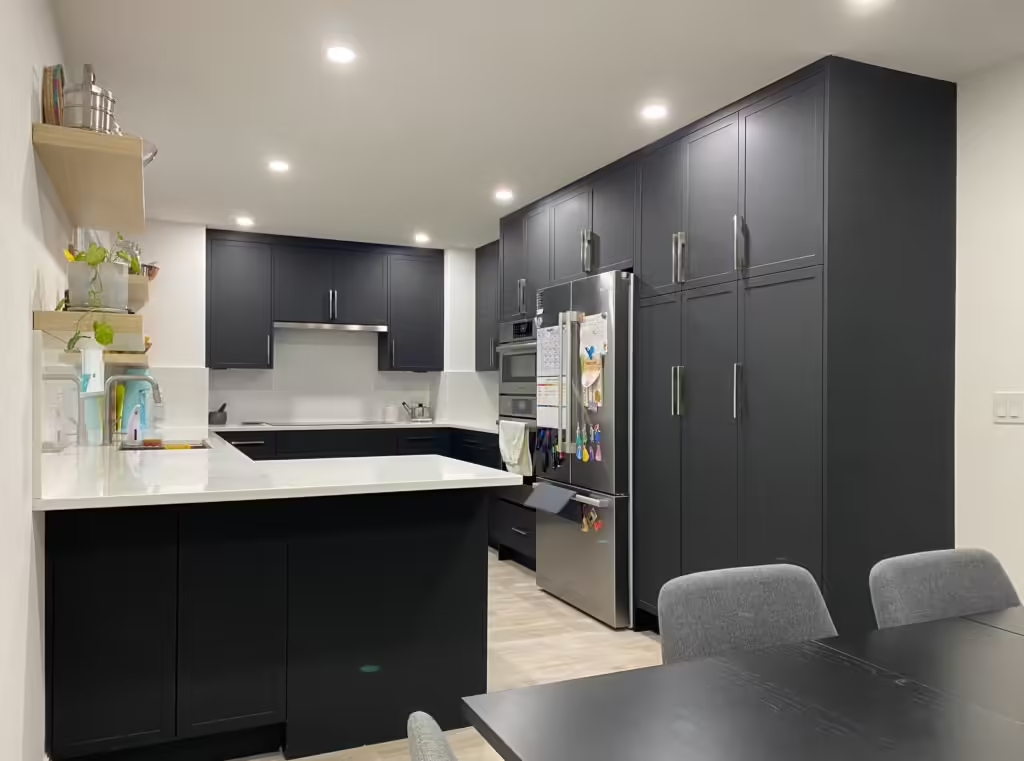
In-stock RTA cabinets
Ready-to-assemble cabinets can be a strong option when availability, value, and a clear design plan matter. They are especially useful for homeowners who want a practical kitchen update without waiting for a long custom production cycle.
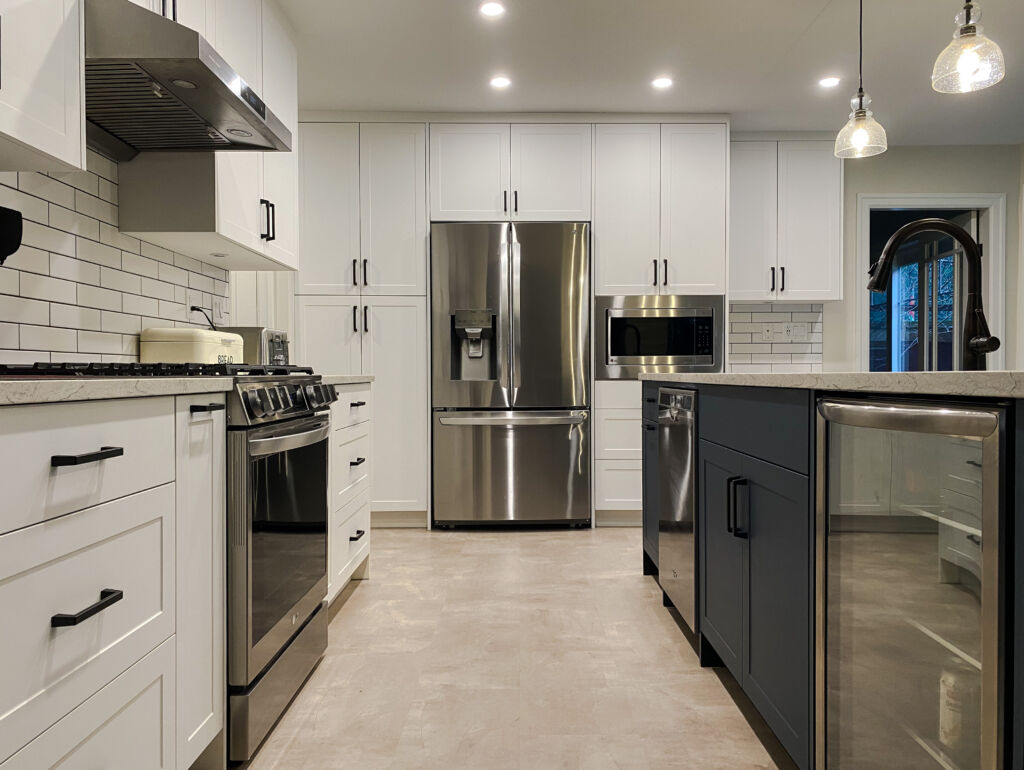
For families who want a clean, bright, and versatile look, white shaker-style cabinets remain a safe and flexible choice. They work with many countertop colours, flooring tones, backsplash styles, and hardware finishes. The key is to avoid making the kitchen feel too cold or flat.
Locally made custom cabinets
Custom cabinets can be a better option when the kitchen has unusual dimensions, specific storage needs, or a more personalized design direction. They usually require a longer planning and production timeline, but they can solve layout problems that standard cabinet sizes cannot.
Big-box cabinet systems
Big-box systems can be appealing because they are familiar and easy to start researching. However, homeowners should pay close attention to layout accuracy, installation details, product limitations, and what level of support is included. A cabinet plan that looks acceptable on screen may still create problems on site if measurements, fillers, panels, appliance clearances, or countertop details are not reviewed carefully.
The best cabinet choice is not always the cheapest or the most expensive. It is the one that fits your project timeline, daily lifestyle, and level of support needed.
3. White Kitchens Are Still Practical — But They Need Warmth
A common question in 2026 is whether white kitchens are still a good choice. The honest answer is yes, but with more thoughtful design.
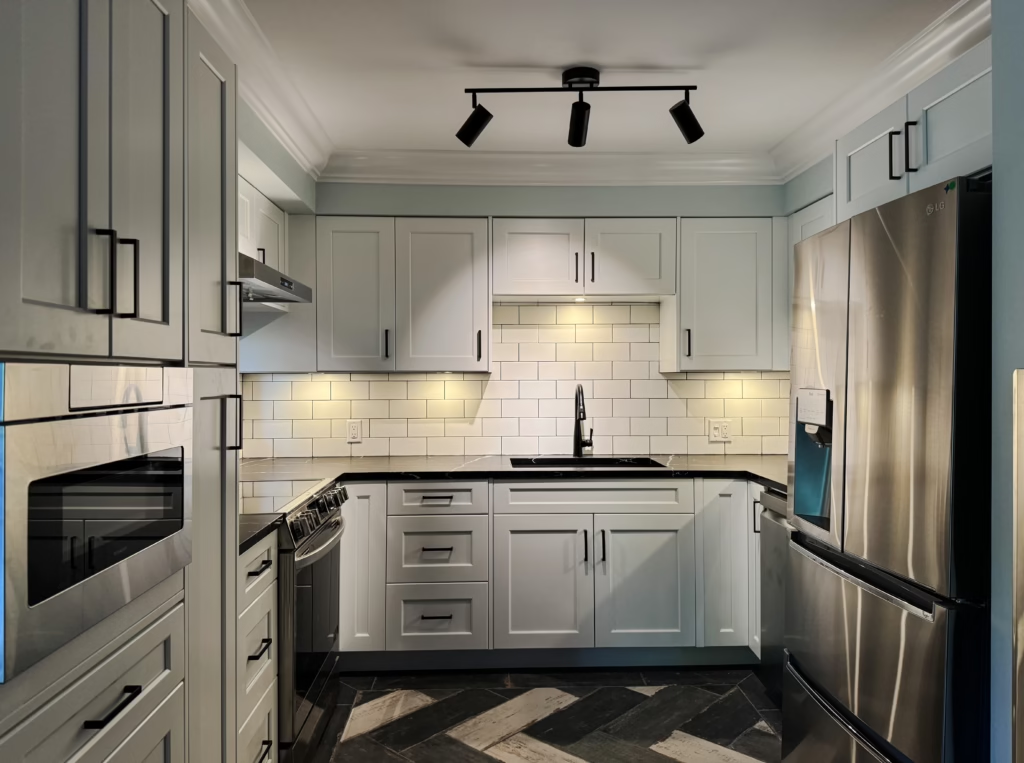
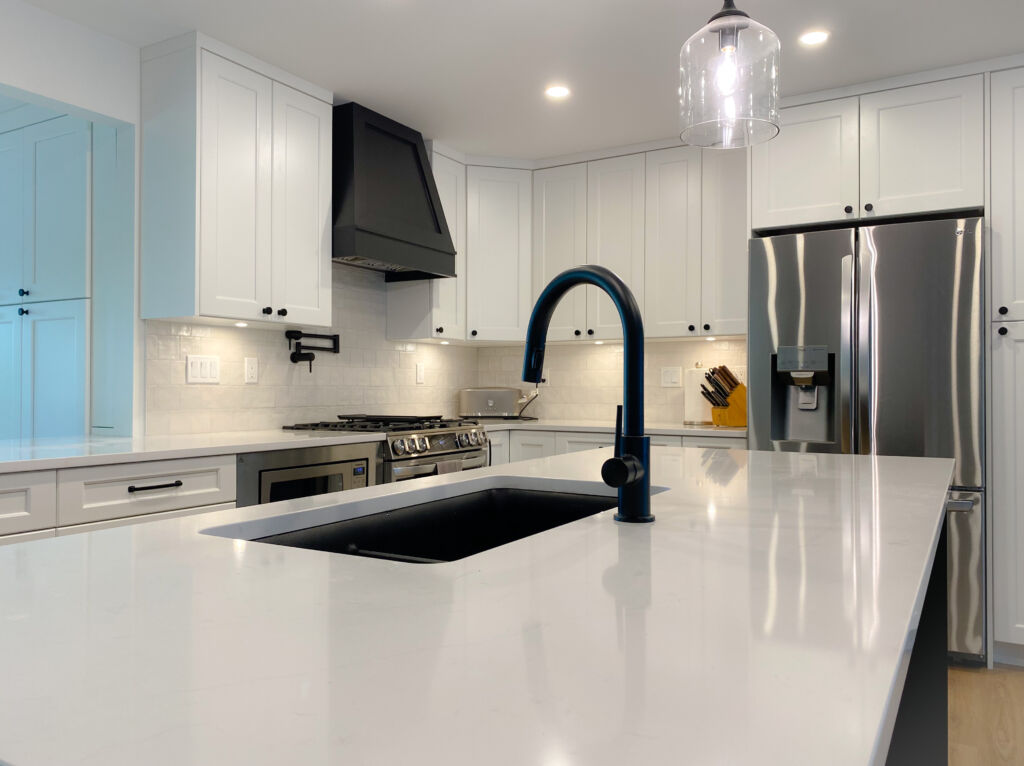
All-white kitchens can feel too plain if every surface is bright white, glossy, and flat. But white cabinets are still useful because they create a clean foundation. They help smaller kitchens feel brighter, they are easy to pair with many countertop materials, and they offer strong long-term flexibility.
The better approach is not “white on white on white.” The better approach is to add warmth and contrast through:
- Quartz countertops with soft veining
- Warm-toned flooring
- Brushed nickel, black, champagne, or brass-style hardware
- A textured or warmer backsplash
- Wood accents, open shelves, or natural decor
- Softer wall colours instead of stark white everywhere
For many families, a white cabinet kitchen is still a low-risk choice. It becomes more current when the full palette is planned carefully. A practical white kitchen should feel bright, comfortable, and easy to live with — not cold or unfinished.
4. Plan Cabinets and Countertops Together
Cabinets and countertops are often quoted separately, but they should not be planned separately.
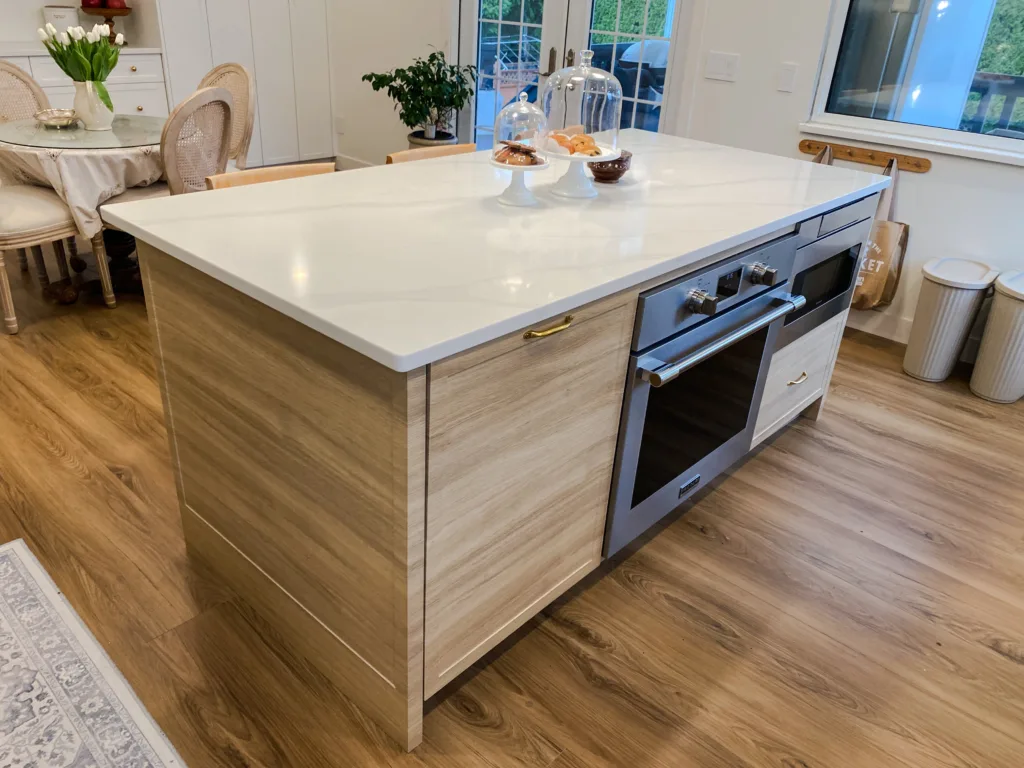
The cabinet layout affects the countertop layout. The countertop material affects the overall look, durability, seam planning, overhang, edge profile, and sometimes even the project cost. If the cabinets and countertops are planned independently, homeowners may face avoidable issues later.
For example:
- A small layout adjustment may reduce unnecessary countertop waste.
- Island sizing affects slab usage and seam placement.
- Sink cabinet selection affects sink cutout planning.
- Corner details affect both cabinet function and countertop finish.
- Countertop colour can change how warm or cool the cabinets appear.
This is especially important for families trying to manage budget. Sometimes a design decision that looks minor can create a large cost difference in countertop fabrication. Planning cabinets and countertops together helps reduce surprises and creates a more finished result.
At Kitchen Express, we focus on cabinets and countertops because these two parts of the kitchen need to work together. A well-planned cabinet layout gives the countertop a better foundation. A well-chosen countertop completes the cabinet design and improves everyday usability.
5. Use Design Support to Avoid Expensive Mistakes
Kitchen design is not only about choosing colours. It is also about preventing mistakes before products are ordered.
A good kitchen design process should check:
- Appliance clearances
- Corner access
- Drawer and door conflicts
- Sink and dishwasher placement
- Pantry and storage needs
- Walkway space
- Countertop overhangs
- Filler and panel requirements
- Installation sequence
These details are not always obvious to homeowners. They are also easy to overlook when the focus is only on the cabinet style or the lowest quoted price.
Design support is especially valuable for families who are trying to keep the project practical. A clear layout, 3D visualization, and cabinet-by-cabinet planning can help homeowners understand what they are buying before the project moves forward. This reduces confusion and helps the final kitchen match the original expectations more closely.
In 2026, this kind of certainty matters. Families do not just want a kitchen that looks good in a rendering. They want fewer delays, fewer surprises, and a smoother path from planning to installation.
6. Decide Where DIY Makes Sense — and Where Support Matters
Some homeowners are comfortable with DIY work. Others prefer professional installation from start to finish. Many families are somewhere in between.
DIY cabinet installation can make sense when:
- The homeowner has renovation or carpentry experience
- The layout is straightforward
- The cabinets are clearly labelled
- The design has already been checked
- The homeowner understands leveling, fastening, fillers, panels, and appliance clearances
However, DIY does not mean homeowners should be left alone with a pile of boxes and a confusing layout. Even experienced DIY customers benefit from professional design review, accurate cabinet lists, and clear layout drawings.
The biggest risk with DIY is not always the installation labour itself. It is ordering the wrong pieces, missing panels, misunderstanding fillers, or discovering too late that something does not fit the way it should.
For homeowners who want to save on labour but still avoid design mistakes, a supported DIY path can be a strong middle option. For homeowners who want a more hands-off experience, professional cabinet installation may be the better choice.
7. Think About Long-Term Daily Use, Not Just the First Impression
A kitchen should look good on the day it is finished, but it also needs to work well every morning, every dinner, and every busy weekend.
Before finalizing the plan, consider:
- Where will small appliances go?
- Is there enough drawer storage?
- Will kids or older family members use the kitchen safely?
- Is the countertop easy to clean?
- Are the cabinet doors and drawers practical for the space?
- Does the layout make cooking easier or more crowded?
- Will the design still feel comfortable in five to ten years?
In many homes, the best kitchen is not the most dramatic one. It is the one that fits the family’s real habits.
That is why practical choices often age better than trend-heavy choices. A balanced cabinet colour, durable countertop, efficient layout, and clear storage plan usually matter more than chasing every new design idea.

8. Bring Measurements, Photos, and Priorities to the Showroom
The easiest way to start is to bring basic information to a showroom visit. You do not need to have every answer ready.
Helpful items include:
- Rough kitchen measurements
- Photos of the current kitchen
- Appliance sizes, if available
- A few inspiration photos
- Your preferred timeline
- Your approximate budget range
- A list of what bothers you most about the current kitchen
This gives the designer a better starting point. It also helps separate “nice to have” ideas from decisions that will actually improve the kitchen.
For Surrey, Langley, Cloverdale, and Greater Vancouver homeowners, a showroom visit can also make product choices more concrete. You can compare cabinet finishes, countertop samples, hardware options, and layout possibilities in person instead of relying only on online photos.

Final Thoughts: The Best 2026 Kitchen Plan Is Clear, Practical, and Well-Coordinated
Kitchen renovation in 2026 is not about spending the most money or following every design trend. For many families, the better goal is a kitchen that feels comfortable, functions well, stays within a realistic plan, and avoids unnecessary surprises.
A practical renovation starts with clear scope, the right cabinet path, thoughtful countertop planning, and design support before products are ordered. Whether you choose in-stock cabinets, a more customized cabinet option, DIY installation support, or professional installation, the most important thing is to make decisions with the full project in mind.
Kitchen Express helps Surrey and Langley homeowners plan cabinets and countertops with a focus on value, practical design, and dependable coordination. If you are planning a kitchen update, visit our Cloverdale showroom with your measurements, photos, and priorities. We can help you compare options and choose a path that makes sense for your home.
